
The Importance of Healthy Lifestyle Habits
You might have noticed how easy it is to feel motivated for a day or two-maybe after watching a motivational video, reading an article, or seeing someone’s “perfect” routine on social media. But that excitement rarely lasts. That’s where healthy lifestyle habits come in. They’re the small, repeatable actions you do consistently, even when motivation dips. And honestly, that consistency is what actually changes your life.
Think about it like brushing your teeth. You don’t do it because you’re “motivated” every morning; you do it because it’s part of your routine. Healthy habits work the same way-they shape your body, mind, and mood over time.
When you cultivate these habits, you’ll notice changes in ways that aren’t always visible immediately: more stable energy throughout the day, clearer thinking, better emotional balance, and even a lighter sense of stress. These are the kinds of wins that stick with you.
Here’s a small example: someone might start drinking an extra glass of water every morning. At first, it feels minor. But after a month, they’re more alert, less hungry at odd times, and even their sleep feels a little deeper. That’s a tiny habit creating ripple effects.
Prioritize Quality Sleep
Let’s be honest-most of us treat sleep like a luxury. “I’ll sleep when I catch up on work,” or “I’ll just push through tonight.” Sound familiar? The thing is, sleep isn’t optional if you want to maintain real energy, mood stability, and overall health. It’s one of the most powerful healthy lifestyle habits you can develop, and it affects far more than just how tired you feel in the morning.
How Sleep Impacts Your Mind and Body
When you skimp on sleep, it doesn’t just make you groggy. Your brain struggles to focus, your mood dips, and stress feels heavier. Hormones that control hunger, metabolism, and even immune function get thrown off balance. Over time, chronic sleep deprivation can increase the risk of heart problems, weight gain, and even depression.
On the flip side, prioritizing quality sleep improves:
- Cognitive function-sharper focus and memory
- Emotional regulation -you handle stress and frustration better
- Physical recovery-muscles repair faster, and energy levels stabilize
- Overall well-being-you feel more in control of your day
Practical Tips to Sleep Better Consistently
You don’t need a fancy sleep routine or a strict schedule overnight. Start small and build up:
- Stick to a bedtime window-aim to go to bed and wake up around the same time daily.
- Create a sleep-friendly environment-cool, dark, and quiet rooms help your body relax naturally.
- Limit screens before bed-scrolling on your phone keeps your brain alert. Try reading a book instead.
- Wind down intentionally-a short meditation, deep breathing, or journaling can signal your body it’s time to sleep.
- Watch caffeine and late-night meals-both can interfere with falling asleep or staying asleep.
Eat Real, Balanced Foods
You’ve probably heard a million diets promise quick results-low-carb, keto, intermittent fasting-and maybe you’ve tried one or two. The problem? Most of them feel like a short-term sprint. The truth is, one of the most effective healthy lifestyle habits isn’t about extremes. It’s about consistently choosing real, balanced foods that nourish your body and mind.
Why Balanced Eating Matters
When you eat mostly whole, nutrient-dense foods, your body works more efficiently. You get steady energy, your brain functions better, and your mood stabilizes. On the flip side, highly processed foods with added sugar and artificial ingredients can leave you feeling sluggish, irritable, or foggy.
Even small improvements make a difference. Swapping sugary snacks for fruit or having a handful of nuts instead of chips can dramatically reduce energy crashes throughout the day.
Simple, Real-Life Guidelines
You don’t need to overhaul your diet overnight. Focus on these easy habits:
- Protein in every meal-eggs, beans, yogurt, or lean meats help keep you full and energized.
- Colorful fruits and vegetables-they’re packed with vitamins, minerals, and fiber.
- Healthy fats-olive oil, avocado, nuts, and seeds support brain health and satiety.
- Stay hydrated-water supports digestion, metabolism, and overall energy
Move Your Body-In a Way You Don’t Hate
Exercise often gets a bad rap. People picture grueling gym sessions, endless running, or complicated routines they’ll never stick to. But here’s the truth: movement doesn’t have to feel like punishment. One of the most sustainable healthy lifestyle habits is simply finding ways to move your body consistently — in ways you actually enjoy.
Why Movement Matters
Regular physical activity doesn’t just sculpt muscles or burn calories. It improves mood, reduces stress, boosts energy, and even sharpens your focus. Endorphins, those little feel-good chemicals, are released during movement, making you feel more alert and happier – almost like a natural mood booster.
Even small doses of activity have noticeable effects. A 20-minute walk in the morning can clear your mind for the day ahead. Short stretching breaks during work can prevent tension headaches or back stiffness.
How to Make Movement Stick
The key is enjoyability and realism. You’re more likely to stick with activities that feel good rather than those you dread. Some practical approaches:
- Walk whenever you can – errands, lunch breaks, or evening strolls.
- Strength training a few times a week – even 15–20 minutes at home makes a difference.
- Move socially – join a recreational sports league or walk with a friend.
- Mix it up – swimming, cycling, dancing, yoga – variety keeps boredom away.
Here’s a little industry insight: fitness experts often say that consistency outweighs intensity. Thirty minutes of enjoyable movement most days will do far more for your health than sporadic, high-intensity workouts you hate.
Manage Stress Effectively
Let’s face it: stress isn’t going anywhere. Deadlines pile up, responsibilities grow, and life throws curveballs when you least expect them. But unmanaged stress doesn’t just make you feel overwhelmed – it quietly affects your body, your sleep, your digestion, and even your mood. That’s why managing stress is one of the most essential healthy lifestyle habits for a happier life.
Why Stress Management Matters
Chronic stress keeps your body in “fight or flight” mode, releasing hormones like cortisol that can increase blood pressure, weaken your immune system, and even trigger weight gain. Mentally, it can leave you feeling irritable, anxious, or foggy-headed.
The good news? Stress is manageable. You don’t need a fancy retreat or hours of meditation. Small, intentional habits can dramatically reduce its impact over time.
Simple, Practical Stress-Reduction Strategies
- Deep breathing or mindfulness – even 3–5 minutes can calm the nervous system.
- Journaling – write down your thoughts or to-dos to clear mental clutter.
- Set boundaries – saying “no” when needed protects your energy.
- Move your body – exercise and walking naturally release tension.
- Take micro-breaks – short pauses during work or daily chores refresh your mind.
Here’s a small real-life observation: people who take a 10-minute walk after lunch report feeling more focused and less irritable for the rest of the afternoon. That’s a tiny habit creating a noticeable difference – and over time, it compounds.
Stay Hydrated Daily
It sounds almost too simple, doesn’t it? “Just drink water.” Yet, staying properly hydrated is one of the most overlooked healthy lifestyle habits – and it affects almost every part of your body and mind.
Why Hydration Matters
Dehydration isn’t always obvious. A slight lack of water can make you feel sluggish, foggy, irritable, or even give you a headache. Your digestion slows, your skin loses its natural glow, and your energy levels dip. On the flip side, drinking enough water supports:
- Energy and focus – your brain works better when it’s hydrated
- Digestion and metabolism – water helps break down food and move nutrients
- Mood regulation – small dips in hydration can increase stress or irritability
- Physical performance – even mild dehydration can make exercise feel tougher
Simple Ways to Stay Hydrated
You don’t need to track gallons or force yourself to chug water all at once. Small, consistent actions work best:
- Keep a water bottle visible at your desk or in your bag.
- Start your morning with a glass of water before coffee.
- Infuse water with lemon, cucumber, or berries if plain water feels boring.
- Drink a small glass before every meal.
Here’s a little observation from real life: I’ve noticed that people who make hydration a habit often report more consistent energy throughout the day, and even their cravings for sugary drinks tend to disappear naturally.
Protect Your Mental and Emotional Health
We often focus so much on eating right, moving, and sleeping that we forget the mental side of wellness. Yet protecting your mental and emotional health is just as essential – and one of the most underrated healthy lifestyle habits for a happier life.
Why Mental Health Matters
Your mental state affects everything: how you interact with others, how you respond to stress, and even how your body functions. Ignoring it can lead to burnout, anxiety, or feelings of emptiness, no matter how “healthy” your physical habits are.
Think about it this way: two people could follow the same diet, exercise, and sleep schedule, but the one with better emotional awareness and stress management will feel more balanced, energized, and capable.
Practical Ways to Protect Your Mind
- Set boundaries – it’s okay to say no to people or commitments that drain you.
- Pause and reflect – journaling or taking a quiet moment can help process emotions.
- Talk it out – a trusted friend, family member, or professional can provide perspective.
- Practice self-compassion – stop treating yourself as harshly as you treat others.
A small real-life example: someone I know started taking 10 minutes every evening just to reflect on the day – no phone, no social media, just thoughts. Within a month, they felt less anxious, slept better, and handled work stress much more calmly.
Cultivate Meaningful Relationships
We often underestimate the impact of the people around us. Yet, one of the most powerful healthy lifestyle habits for a happier life is nurturing genuine connections. Relationships aren’t just about fun conversations – they’re essential for mental health, emotional support, and even longevity.
Why Relationships Matter
Humans are wired for connection. Social support reduces stress, improves mood, and can even boost your immune system. Conversely, isolation or toxic relationships can drain energy, increase anxiety, and make even simple daily tasks feel heavier.
Even small, consistent interactions can make a difference. A quick check-in with a friend, a smile at a neighbor, or sharing a meal with family strengthens your social bonds and fosters a sense of belonging.
Practical Ways to Build Connections
- Reach out regularly – call or message friends and family, even if it’s just a quick hello.
- Engage in community activities – clubs, classes, or volunteer work help you meet like-minded people.
- Prioritize quality over quantity – a few meaningful relationships beat dozens of surface-level connections.
- Be present – put away your phone during conversations and genuinely listen.
Here’s a real-life observation: someone who started dedicating one evening a week to connecting with friends noticed their stress levels dropped, and they felt more energized and motivated in other areas of life
Limit Digital Overload
Be honest. How many times have you picked up your phone “just for a minute” and somehow lost 40?
We live online now. Work, news, social media, entertainment – it’s all one swipe away. And while technology is useful, constant digital exposure quietly drains your focus, mood, and even your sleep quality. That’s why reducing screen overload has become one of the more important healthy lifestyle habits in modern life.
How Too Much Screen Time Affects You
When you’re always plugged in:
- Your brain rarely gets a break
- Notifications keep your stress response slightly activated
- Sleep suffers because of blue light exposure
- Comparison on social media impacts self-esteem
You might not notice it immediately. But over time, digital fatigue builds. Ever feel tired even though you didn’t physically do much? That’s mental overstimulation.
Simple Ways to Reduce Digital Overload
You don’t need to delete every app. Just create boundaries.
- Keep your phone out of reach during meals
- Turn off non-essential notifications
- Avoid scrolling 30–60 minutes before bed
- Set specific times to check social media instead of random browsing
Here’s something interesting: people who take even one “low-tech evening” per week often report sleeping better and feeling mentally lighter the next day. One evening. That’s it.
Practice Daily Gratitude and Positive Awareness
Gratitude can sound cliché. But practiced consistently, it genuinely changes how your brain processes life.
And no, it’s not about pretending everything is perfect.
It’s about noticing what’s already working.
One of the most underrated healthy lifestyle habits for long-term happiness is training your mind to recognize small positives -especially on ordinary days.
Why Gratitude Works
Your brain naturally scans for problems. It’s wired for survival.
But when you consciously look for small wins – a productive meeting, a good meal, a kind message – you balance that negative bias. Over time, this improves mood stability and emotional resilience.
It doesn’t mean stress disappears. It just doesn’t dominate your mental space.
Simple Gratitude Practices
- Write down three small wins before bed
- Tell someone you appreciate them
- Pause and mentally acknowledge something good in the moment
I once suggested this habit to someone who felt stuck in constant stress. Within weeks, they said something surprising: “Nothing huge changed… but I feel calmer.” That’s the subtle power of mental reframing
Wrapping It All Up: Healthy Lifestyle Habits for a Happier Life
Here’s the reality: happiness and health aren’t built overnight. They aren’t flashy, perfect, or Instagram-worthy. They’re built in small, repeatable choices – the everyday actions you commit to, even when motivation fades.
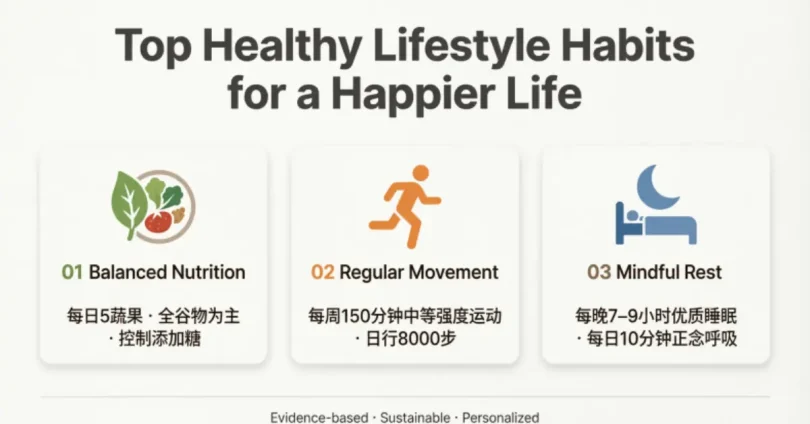
Healthy lifestyle habits – from prioritizing sleep, eating real food, and moving your body, to managing stress, nurturing relationships, and limiting digital overload – all work together. They create a positive ripple effect: better sleep improves focus, movement reduces stress, gratitude enhances mood, and so on.
The beauty is that you don’t have to overhaul your life all at once. Pick one habit, focus on it for a week, and then build another. Over time, these small steps compound into a life that feels more energized, balanced, and genuinely happier.
Here’s the key takeaway: consistency beats intensity. Motivation comes and goes, but habits keep you moving forward. When you approach your daily routines intentionally – not perfectly – you create a foundation that supports both your physical and emotional well-being.
What are healthy lifestyle habits?
Healthy lifestyle habits are consistent daily actions, like eating well, sleeping enough, exercising, and managing stress, that improve your physical and mental well-being
How long does it take to see results from healthy habits?
Small, consistent habits can show noticeable improvements in energy, mood, and focus within a few weeks. Long-term benefits build over months and years.
Do I need to change everything at once?
No. Start with one habit at a time. Gradually stacking habits is more sustainable and keeps motivation high.
Can healthy habits improve mental health too?
Absolutely. Sleep, exercise, stress management, social connections, and gratitude all support emotional resilience and mental clarity.
Are small changes really effective?
Yes! Tiny, consistent changes, like drinking more water or taking a 10-minute walk, add up over time and have a big impact on overall health and happiness.
Conclusion
Building a happier life isn’t about drastic changes or chasing perfection. It’s about small, consistent healthy lifestyle habits – like sleeping well, eating real food, moving your body, managing stress, staying hydrated, nurturing relationships, and practicing gratitude.
Each habit might feel minor on its own, but together they create a foundation for better energy, clearer thinking, and more emotional balance. Start with one simple change today, stay consistent, and watch how these choices quietly transform your life over time.