

Introduction
Digital healthcare is changing the way people access medical services around the world. From online doctor consultations to mobile health apps, digital healthcare makes medical support faster, easier, and more convenient. Today, patients no longer need to visit hospitals for every small issue. Instead, they can use digital tools to connect with healthcare providers from their homes.
In recent years, digital healthcare has grown rapidly. New digital healthcare solutions are helping doctors monitor patients remotely, store medical records safely, and provide better treatment plans. At the same time, digital health news often highlights new innovations such as wearable devices, artificial intelligence tools, and remote monitoring systems.
For beginners, digital healthcare may sound complex. However, the idea is simple. It means using technology to improve health services and patient care. Whether you are a student, healthcare worker, business owner, or patient, understanding digital healthcare is becoming more important every day.
In this complete guide, you will learn what digital healthcare means, why it matters, how it works step by step, its benefits and risks, common mistakes to avoid, and expert tips to help you stay informed.
What Is Digital Healthcare?
Digital healthcare refers to the use of digital technologies to deliver medical services and manage health information. It combines healthcare with modern technology such as software, mobile apps, internet platforms, and smart devices.
In simple words, digital healthcare uses technology to make healthcare services better and more accessible.
It includes:
- Telemedicine and online consultations
- Electronic health records
- Mobile health applications
- Wearable health devices
- Remote patient monitoring
- Artificial intelligence tools
- Cloud-based medical systems
For example, when a patient books an appointment online or consults a doctor through a video call, that is digital healthcare. When hospitals store patient data electronically instead of on paper, that is also digital healthcare.
Digital healthcare solutions focus on improving patient experience, reducing errors, and increasing efficiency. As a result, healthcare providers can deliver faster and more accurate services.
Why Is Digital Healthcare Important?
Digital healthcare plays a major role in modern medicine. It improves access to medical services, especially in rural or remote areas.
First, it saves time. Patients can consult doctors without long travel or waiting times.
Second, it improves communication. Doctors can quickly share test results and prescriptions through digital systems.
Third, it increases efficiency. Hospitals can manage records, appointments, and billing digitally.
Fourth, it supports preventive care. Wearable devices monitor heart rate, sleep patterns, and physical activity.
Additionally, digital health solutions reduce paperwork and help lower long-term healthcare costs.
Digital health news often reports how technology is helping detect diseases earlier and manage chronic conditions more effectively.
In short, digital healthcare improves patient outcomes while making the healthcare system more organized and reliable.
Detailed Step-by-Step Guide to Digital Healthcare
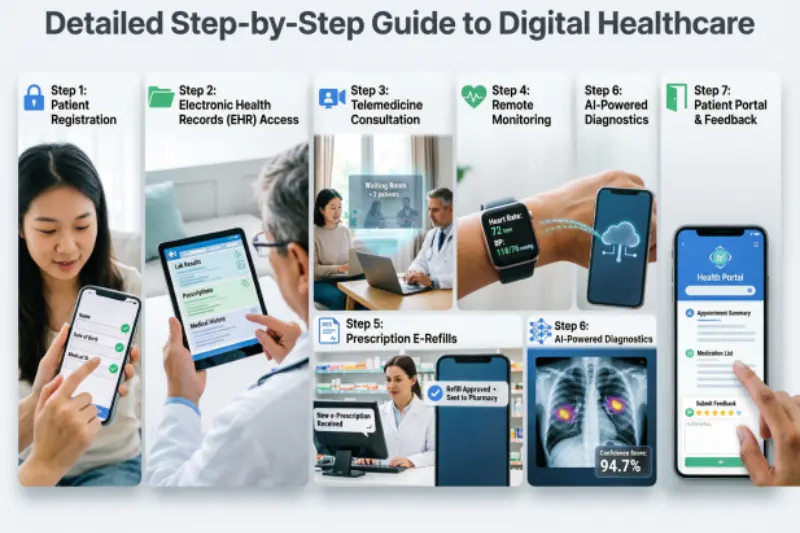
Step 1: Understand the Basic Technology
Before using digital healthcare systems, it is important to understand the main components:
- Hardware – Devices such as smartphones, tablets, computers, and wearable monitors
- Software – Applications and medical management programs
- Internet Connectivity – Secure networks that allow communication
All these components work together to support digital healthcare services.
Step 2: Learn About Telemedicine
Telemedicine allows patients to speak with doctors through video calls or messaging platforms.
Here is how it works:
- Patient books an appointment online
- Doctor reviews medical history
- Video consultation takes place
- Prescription is sent digitally
Telemedicine is one of the most popular digital healthcare solutions today.
Step 3: Use Electronic Health Records (EHR)
Electronic Health Records store patient data in digital form.
These records include:
- Medical history
- Lab reports
- Medications
- Allergies
- Treatment plans
Digital records improve accuracy and reduce paperwork errors.
Step 4: Explore Mobile Health Apps
Mobile health apps help patients manage their health daily.
Examples include:
- Medication reminder apps
- Fitness tracking apps
- Diet monitoring tools
- Mental health support apps
These digital health solutions encourage people to take control of their health.
Step 5: Understand Remote Patient Monitoring
Remote monitoring devices track patient health data in real time.
For example:
- Blood pressure monitors
- Glucose monitors
- Heart rate trackers
Doctors receive this data digitally and can respond quickly if needed.
Step 6: Learn About Artificial Intelligence in Healthcare
Artificial intelligence helps analyze medical data and support decision-making.
AI tools can:
- Detect diseases in medical images
- Predict health risks
- Suggest personalized treatments
Digital health news frequently covers advancements in AI-based diagnosis tools.
Benefits of Digital Healthcare
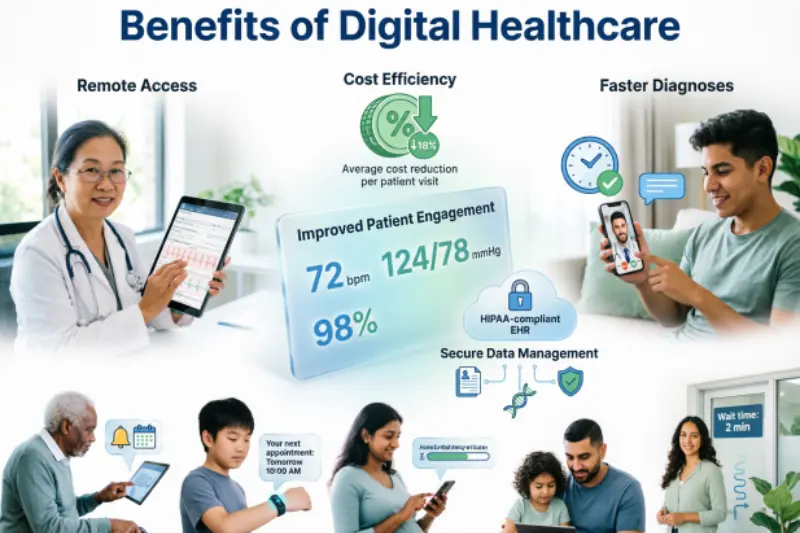
Digital healthcare offers many advantages for patients and providers.
- Faster access to medical care
- Improved patient communication
- Reduced paperwork and manual errors
- Better management of chronic diseases
- Remote access to specialists
- Lower operational costs for hospitals
- Improved data accuracy
- Enhanced preventive healthcare
For example, a patient with diabetes can use remote monitoring devices to share daily glucose readings with their doctor.
Digital healthcare solutions create a smoother healthcare experience for everyone involved.
Disadvantages / Risks
Although digital healthcare has many benefits, it also comes with certain risks.
- Data privacy concerns
- Cybersecurity threats
- High setup costs
- Technical issues or system failures
- Limited internet access in some regions
- Learning challenges for elderly users
- Overreliance on technology
If security systems are weak, patient data could be exposed. Therefore, strong cybersecurity measures are essential.
Common Mistakes to Avoid
When implementing digital healthcare, mistakes can reduce its effectiveness.
One common mistake is ignoring proper staff training. Healthcare workers must understand how to use digital systems correctly.
Another mistake is choosing complicated software that is not user-friendly.
Some organizations fail to update systems regularly, which increases security risks.
Poor data protection policies can also lead to serious problems.
Lastly, not listening to patient feedback may result in low adoption rates.
Avoiding these mistakes helps ensure successful digital health solutions.
FAQs
1. What is digital healthcare in simple terms?
Digital healthcare means using technology like apps, online platforms, and digital records to provide medical services and manage health information.
2. Is digital healthcare safe?
Yes, digital healthcare can be safe when proper security systems are in place. Healthcare providers use encrypted systems to protect patient data.
3. How does telemedicine work?
Telemedicine allows patients to consult doctors through video calls. After consultation, prescriptions and advice are sent digitally.
4. Can digital healthcare replace traditional hospitals?
No, it supports hospitals but does not replace them. Physical examinations and surgeries still require in-person visits.
5. What are digital healthcare solutions?
Digital healthcare solutions include telemedicine platforms, mobile health apps, electronic health records, and remote monitoring systems.
6. Why is digital health news important?
Digital health news keeps professionals and patients informed about new technologies, regulations, and medical advancements.
7. Who can benefit from digital healthcare?
Patients, doctors, healthcare administrators, and insurance companies can all benefit from digital healthcare systems.
Expert Tips & Bonus Points
If you want to stay updated in digital healthcare, follow these practical tips.
- Read reliable digital health news regularly
- Take online courses on health technology
- Learn basic data privacy practices
- Encourage digital literacy among patients
- Start with simple digital health solutions before upgrading
Healthcare providers should focus on patient-friendly platforms.
Patients should use secure and trusted apps only.
Also, remember that technology should improve human care, not replace it.
Digital healthcare works best when combined with professional medical guidance.
Conclusion
Digital healthcare is transforming modern medicine in powerful ways. It connects patients and doctors through online platforms, stores medical data securely, and supports better diagnosis and treatment. From telemedicine services to wearable health devices, digital healthcare makes healthcare more accessible and efficient.
Although there are risks such as cybersecurity threats and high initial costs, the long-term benefits are significant. Faster service, better communication, improved accuracy, and preventive care are major advantages.
Digital healthcare solutions continue to evolve as new technologies enter the market. Digital health news shows constant innovation in artificial intelligence, remote monitoring, and personalized treatment tools.
For beginners and intermediate readers, understanding digital healthcare is essential in today’s world. It helps you make informed decisions about your health and stay updated with medical advancements.
